
 English
 简体中文
简体中文
 Español
 Русский
 Português
 العربية
- Check valves
- 1 min de lecture
Differences between Overlapping And Intermediate Clamps
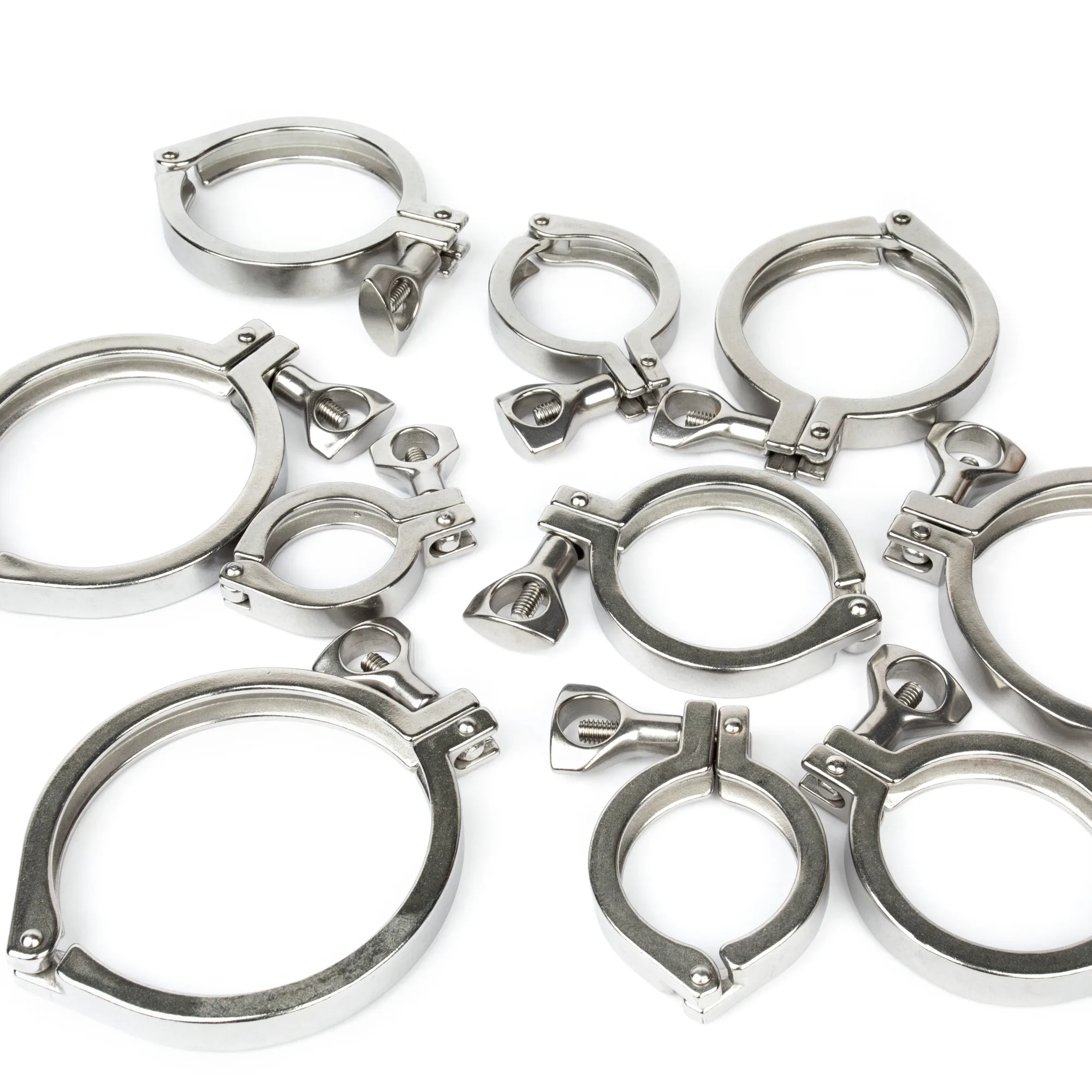
Structural Features: The two semi-rings of the clamp overlap when closed, resulting in a larger contact area and more even clamping force distribution.
Overlapping Clamp
Structural Features: The two semi-rings of the clamp overlap when closed, resulting in a larger contact area and more even clamping force distribution.
Advantages: Better sealing effect, able to withstand higher pressure and vacuum, and strong vibration resistance.
Intermediate Clamp
Structural Features: The two semi-rings of the clamp clamp from both sides towards the middle, resulting in a relatively smaller contact area. The sealing ring is directly compressed by the tension of the bolts.
Advantages: Faster installation speed and lower space requirements.
Comparison of Usage Effects
Application Scenarios Selection Guide
Choose the right stacked clamps:
1. Sanitary piping in the food, beverage, and pharmaceutical industries (requiring zero leakage)
2. High-pressure, high-vacuum fluid transport systems
3. Connections to equipment with strong vibrations, such as pumps and compressors
4. Pipe connections with large diameters (≥50mm)
Choose the intermediate clamps:
1. Low-pressure scenarios such as general industrial pipelines and ventilation ducts
2. Temporary pipelines requiring quick installation and frequent disassembly
3. Small-diameter (≤50mm), low-pressure, vibration-free conditions
4. Projects with cost sensitivity and high installation efficiency requirements
À lire ensuite
-
- Check valves
- 3 min de lecture
What are the key features of a high-quality check valve?
-
- Check valves
- 3 min de lecture
How does a stainless steel check valve work?
-
- Check valves
- 4 min de lecture
What is the main function of a stainless steel check valve?
-
- Check valves
- 3 min de lecture
What Are The Common Connection Methods for Sanitary Check Valves?