
 English
 简体中文
简体中文
 Español
 Русский
 Français
 العربية
- Plug valves
- 1 min de leitura
What Are The Main Advantages of Using Stainless Steel in Sanitary Plug Valves?
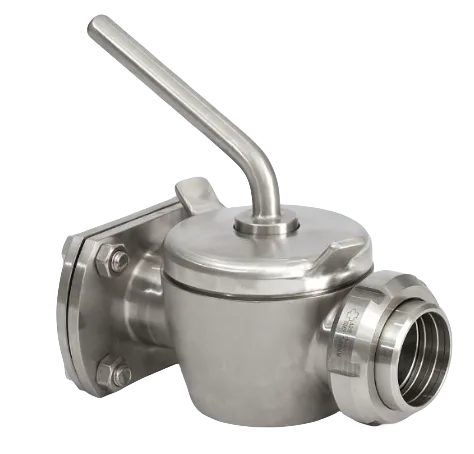
The advantages of using stainless steel in sanitary plug valves are significant, primarily focusing on four aspects: corrosion resistance, excellent hygienic properties, robustness and durability, and superior ease of cleaning.
The advantages of using stainless steel in sanitary plug valves are significant, primarily focusing on four aspects: corrosion resistance, excellent hygienic properties, robustness and durability, and superior ease of cleaning.
Specific advantages are shown in the table below:
Among these advantages, the "superior hygienic properties" of stainless steel are the most crucial, achieved through surface treatment. The following processes are commonly used:
Mirror polishing: Mirror polishing of the valve's outer surface reduces the surface roughness (Ra) to an extremely low level of 0.8μm or even below 0.4μm, effectively preventing dirt adhesion.
Electropolishing: Electropolishing is often used on the valve body cavity to further reduce surface roughness and remove micro-burrs, significantly improving corrosion resistance and cleanliness.
Passivation treatment: A denser chromium oxide passivation film is formed on the valve surface using chemical methods, further enhancing corrosion resistance.
Valve core hardening treatment: Chromium plating or other hardening treatments are applied to the valve core surface to enhance its wear resistance and ensure reliable sealing during long-term operation.
How to choose stainless steel material?
In sanitary plug valves, the most commonly used stainless steel materials are 304 and 316L. The choice mainly depends on the application scenario:
In summary, stainless steel combines its physicochemical properties (corrosion resistance, high strength) with specialized surface treatment techniques (polishing, hardening) to comprehensively ensure the cleanliness, safety, and reliability of fluid pipelines.
Leia a seguir
-
-
- Plug valves
- 3 min de leitura
How to select stainless steel sanitary PLUG VALVE for beverage applications
-
- Plug valves
- 4 min de leitura
How does a stainless steel manual sanitary plug valve work on a production line?
-
- Plug valves
- 2 min de leitura
Comparison of stainless steel sanitary plug valves for food processing