
 English
 简体中文
简体中文
 Русский
 Français
 Português
 العربية
Inspección de válvulas sanitarias, desde la barra de material hasta la caja embalada
La inspección de válvulas sanitarias aquí es un procedimiento, no una promesa: cada lote de material se lee en nuestros propios espectrómetros antes de ser mecanizado, cada válvula se somete a una prueba de presión antes de su envío, y al menos el 10% de un pedido terminando se mide nuevamente antes de ser embalado. Lo que no podemos verificar, no lo afirmamos; y lo que suministramos cuenta con una garantía de 3 años.
Cómo verificamos lo que expedimos
El material, el acabado superficial y la presión se comprueban con equipos propios, en la misma fábrica donde se mecanizó la pieza. No se envía nada fuera para su verificación, por lo que nada es verificado por alguien ajeno al resultado.
Material
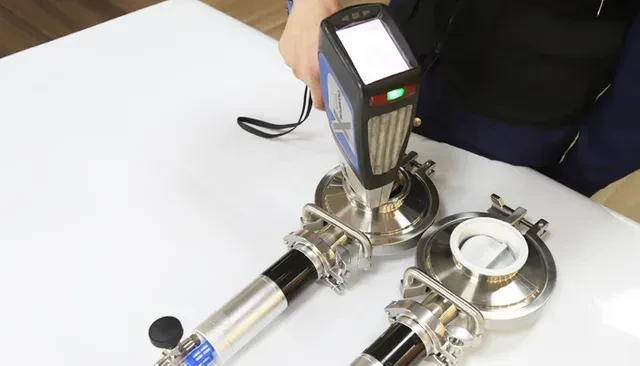
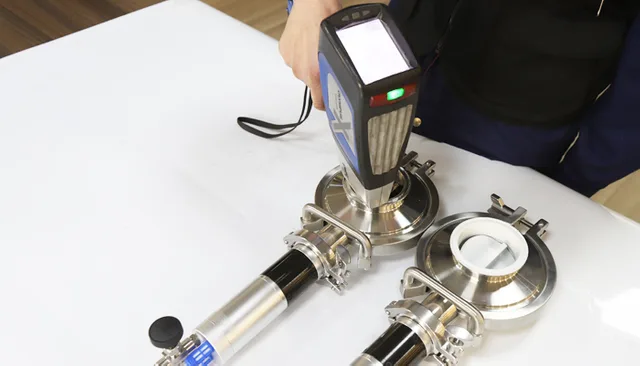
3 espectrómetros confirman la aleación antes del mecanizado; es nuestra propia lectura, no un certificado de fábrica transferido por un proveedor.
Superficie
La rugosidad Ra se mide con nuestro propio instrumento y se registra asociada al pedido, de modo que el valor de su documentación es medido y no estimado.
Presión
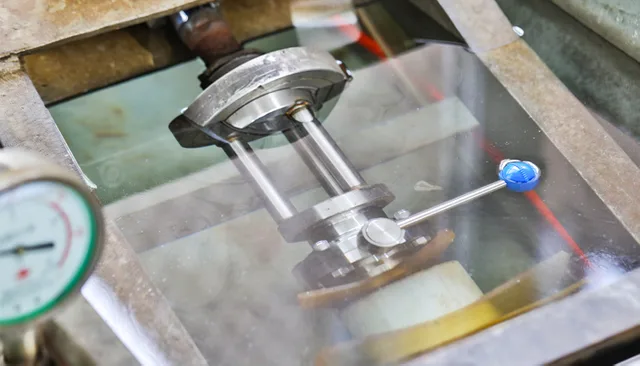
3 bancos de prueba. Cada válvula se prueba individualmente, sin muestreos, y el informe se adjunta al envío.
Certificación
Materiales conformes con CE, PED, ISO 9001 y FDA, con un certificado EN 10204 3.1 en cada pedido.
¿Qué se comprueba y cuándo?
Tres puntos críticos en la fabricación de una válvula donde se puede detectar cualquier desviación: el material antes del corte, la primera pieza frente a su plano y el producto terminado antes del embalaje. Todo ello verificado con nuestros propios equipos de medida, en la misma planta que mecanizó la pieza.
Antes de realizar cualquier corte
Materia prima
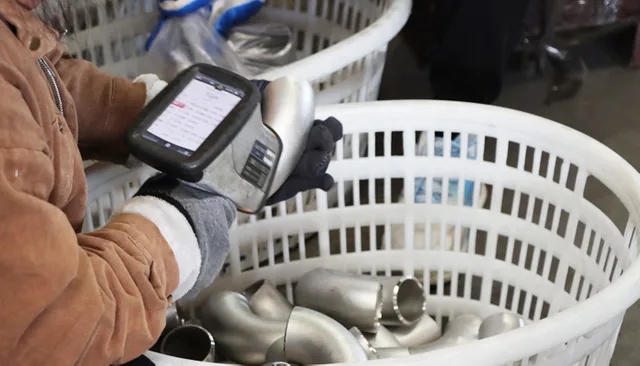
- Cada lote se analiza para verificar la aleación con nuestros propios espectrómetros. Cualquier valor fuera de especificación se rechaza antes de pasar a mecanizado.
- Las piezas fundidas y los brutos se inspeccionan en busca de sopladuras tras el mecanizado y antes del pulido.
- El contenido de carbono y los informes de ensayos mecánicos están disponibles previa solicitud, junto con el certificado EN 10204 3.1 que acompaña al envío.
Antes de iniciar la producción
Primer artículo
- Se miden dos muestras de las nuevas matrices con respecto a su plano.
- El informe se le envía antes de que comience la producción en serie, de modo que cualquier desviación dimensional se discuta sobre el papel y no sobre un pallet.
Antes de realizar el embalaje
Producto acabado
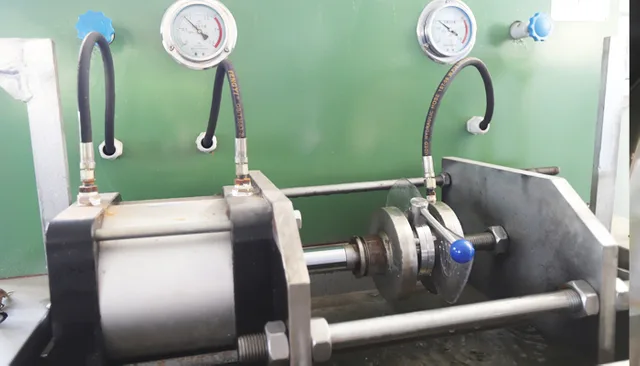
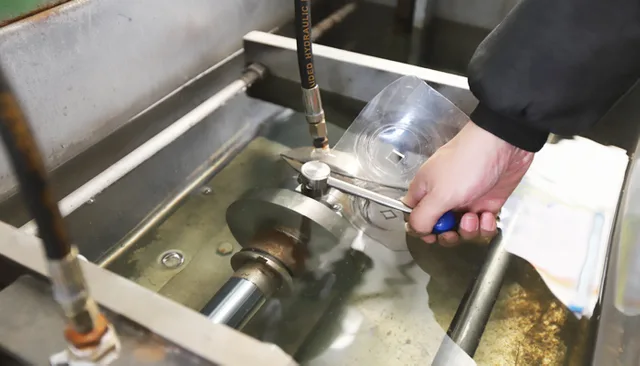
- Cada válvula se somete a ensayos de presión y temperatura. No una muestra del lote, sino cada una de ellas.
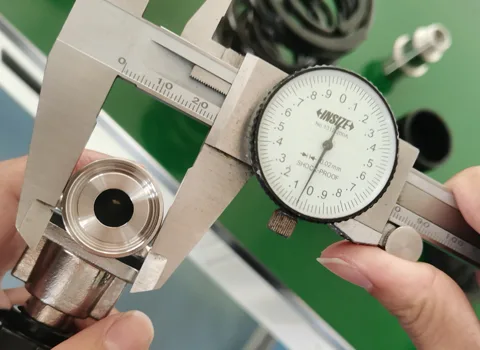
- Al menos el 10% de la cantidad terminada se vuelve a comprobar en cuanto a rugosidad superficial, espesor de pared, redondez, tamaño y sopladuras.
- La cantidad de cada partida se contrasta con el pedido antes de su embalaje, de modo que cualquier artículo faltante o erróneo se detecta aquí y no en sus instalaciones.
- Todo se envía en embalajes diseñados para soportar el trayecto, no para quedar bien en una fotografía.
¿Qué comprobamos y con qué?
Todos los instrumentos aquí presentes son nuestros, ubicados en la fábrica que mecanizó la pieza. No se envía nada fuera para su medición, por lo que nada es medido por alguien sin implicación en el resultado.
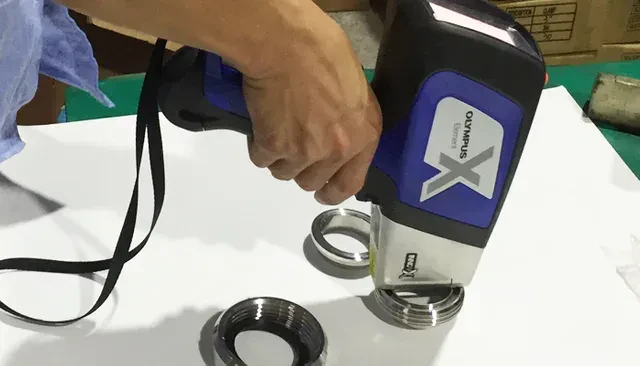 :espectrómetros en la fábrica
Composición química
Espectrómetro de acero inoxidable
Cómo se hace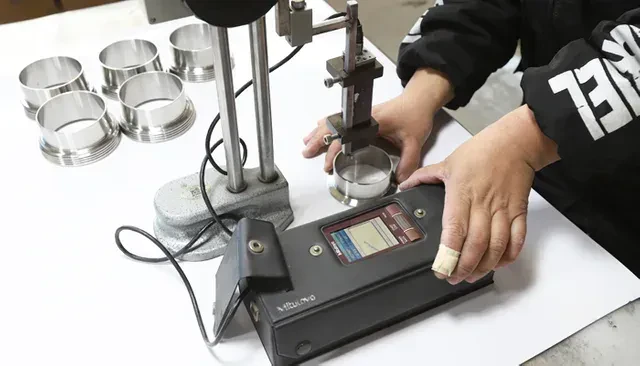 Registrado con el pedido
Rugosidad superficial
Instrumento de rugosidad Ra
Cómo se hace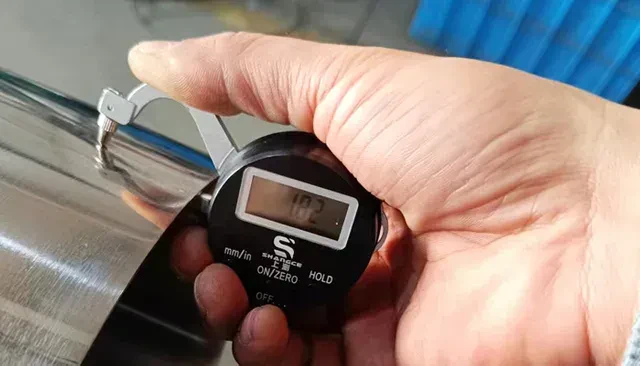 Medido en la pieza conformada
Espesor de pared
Micrómetro y medidor de espesores
Cómo se hace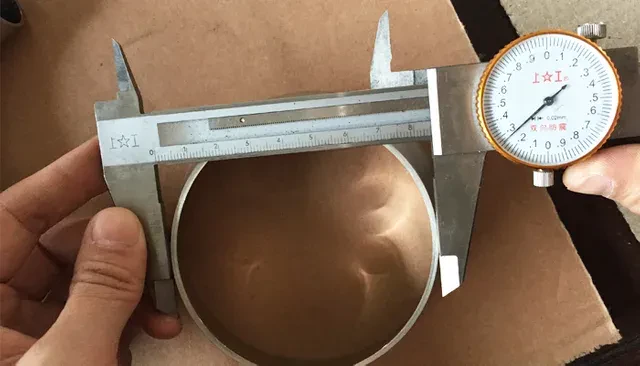 Según su plano
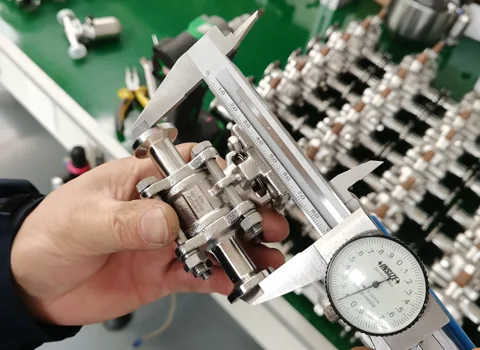
Ovalidad y dimensiones
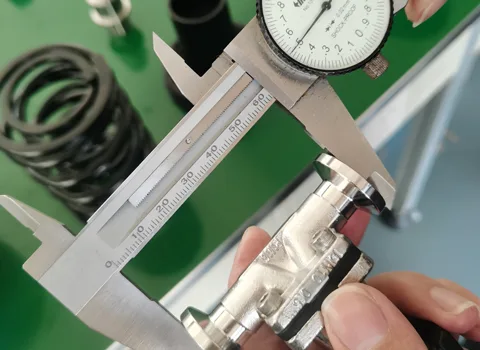
Calibre pie de rey
Cómo se hace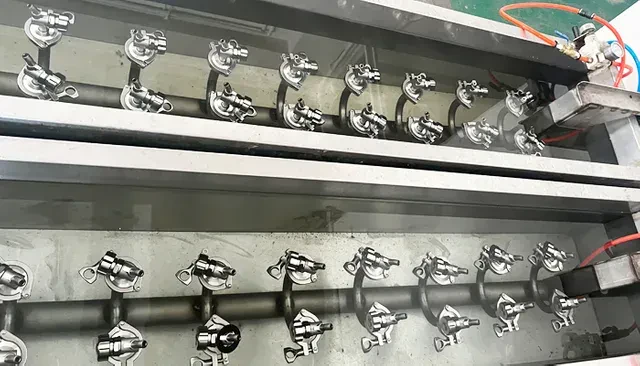 3 centros de prueba
Presión
Banco de pruebas de presión
Cómo se hace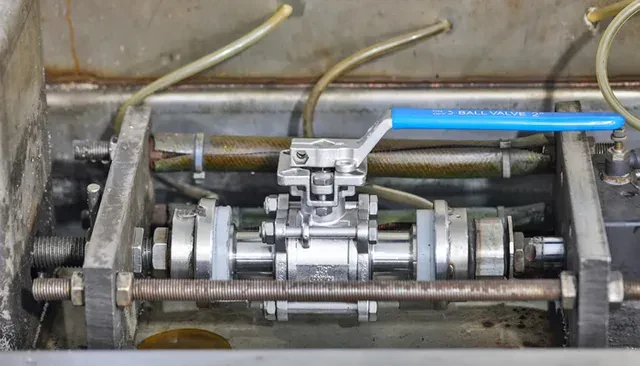 Cada válvula, no una muestra
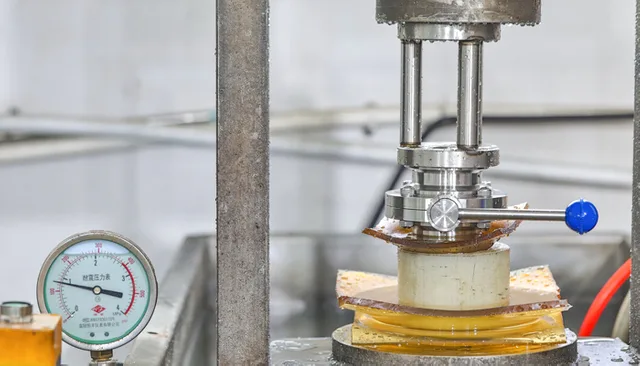
Fugas
Máquina de presión hidráulica
Cómo se haceTambién comprobado, y comprobado bajo petición
Rectitud
Escala horizontal y vertical
Comprobado en los conjuntos antes de su embalaje.
Corrosión
Probado bajo demanda
Se organiza cuando la aplicación lo requiere; indíquenoslo en su consulta.
Explosión
Probado bajo demanda
Se organiza cuando la aplicación lo requiere; indíquenoslo en su consulta.
Las normas detrás de las pruebas
- PED 2014/68/EU(se abre en una pestaña nueva) La Directiva de Equipos a Presión de la UE, a la que responden las pruebas de presión en líneas europeas.
- ISO 9001(se abre en una pestaña nueva) La norma de gestión de calidad bajo la cual se audita nuestro sistema.
¿Qué cubre la garantía?
Joneng respalda las válvulas y conexiones de acero inoxidable que suministra durante 3 años. Lo que eso cubre y lo que no, se establece aquí en lugar de dejarlo para una disputa.
3
años en piezas de acero inoxidable
- Qué está cubierto Válvulas y conexiones de acero inoxidable suministradas por Joneng, durante 3 años a partir del envío.
- Qué no está cubierto Piezas consumibles —juntas, tapas y similares— que se desgastan durante el servicio y se sustituyen como parte del mantenimiento.
- Cuéntenos primero Aplicaciones fuera del servicio de proceso ordinario: medios fuertemente alcalinos como la producción de chile, o frío extremo como −40 °C. Declárelas en la consulta y le diremos lo que el material resistirá antes de realizar el pedido, en lugar de después.
Si un lote es defectuoso
Una vez que ambas partes acuerdan que el fallo es del lote y no de la manipulación, la cantidad cubierta no se rige por los términos ordinarios. Se resuelve de una de estas dos formas.
- Enviamos piezas de repuesto o reparables, y se montan en el lugar donde se encuentran los productos.
- Si no es posible hacerlo, ni siquiera con nuestra orientación, acordamos el siguiente paso: compensación, un nuevo envío o la devolución de la mercancía.
Preguntas sobre inspección y garantías
¿Qué porcentaje de un pedido se inspecciona?
¿Qué certificados e informes se incluyen con un pedido?
¿Cómo se aseguran de que el material sea realmente 316L?
¿Qué cubre la garantía?
Envíenos la especificación y la prueba que necesita
Indíquenos las condiciones de servicio, así como el tamaño y la conexión. Si una aplicación requiere una prueba de corrosión o explosión, o un informe que no emitamos de forma estándar, indíquelo en su consulta y le responderemos antes de que realice el pedido.
- Certificado de material en cada pedido
- Cada válvula se somete a prueba de presión, sin muestreos
- Cotizado en su idioma y su Incoterm