
 English
 简体中文
简体中文
 Русский
 Français
 Português
 العربية
- Specifying
- 1 min de lectura
Seven lines that turn an enquiry into a quotation
Most enquiries come back as a request for more information. Seven facts are usually the whole difference, and none of them takes more than a minute to look up.
Why a price comes back as a question
A sanitary valve is not one product. The same nominal size covers a dozen builds that differ in seat, in body finish, in actuation and in connection, and each of those changes the price and the lead time.
So an enquiry that names only a size and a type cannot be priced. It can only be answered with the list of things the person answering now has to ask, and that exchange is usually where a week goes.
The seven
Size and connection standard. The nominal bore and whether it terminates in a clamp, a weld, a union, and to which standard — DIN, SMS, ISO or 3-A. Half of all requoting starts here.
Body and seat material. The grade of steel and the elastomer, or the duty they have to survive if you would rather we chose.
Actuation. Manual, pneumatic single or double acting, and whether a position feedback is needed.
Quantity, and whether it repeats. A hundred once and a hundred a quarter are different prices.
What runs through it, at what temperature and pressure.
The cleaning regime. Chemistry, temperature, frequency, and whether it ends in steam.
The destination port and the Incoterm you work on.
What you get back
With those seven a quotation arrives priced, with a lead time, and with the certificates named. Without them the first reply is a form.
If a fact is genuinely unknown, say so rather than leaving it out — "we do not yet know the CIP temperature" tells us to quote a seat that covers the range, and leaving it blank tells us nothing at all.
Siga leyendo
-
-
- Materials
- 2 min de lectura
EPDM or PTFE: which seat survives your CIP
-
- Fittings and clamps
- 3 min de lectura
Key Differences Between NPT and BSP Pipe Fitting Dimensions
-
- Fittings and clamps
- 4 min de lectura
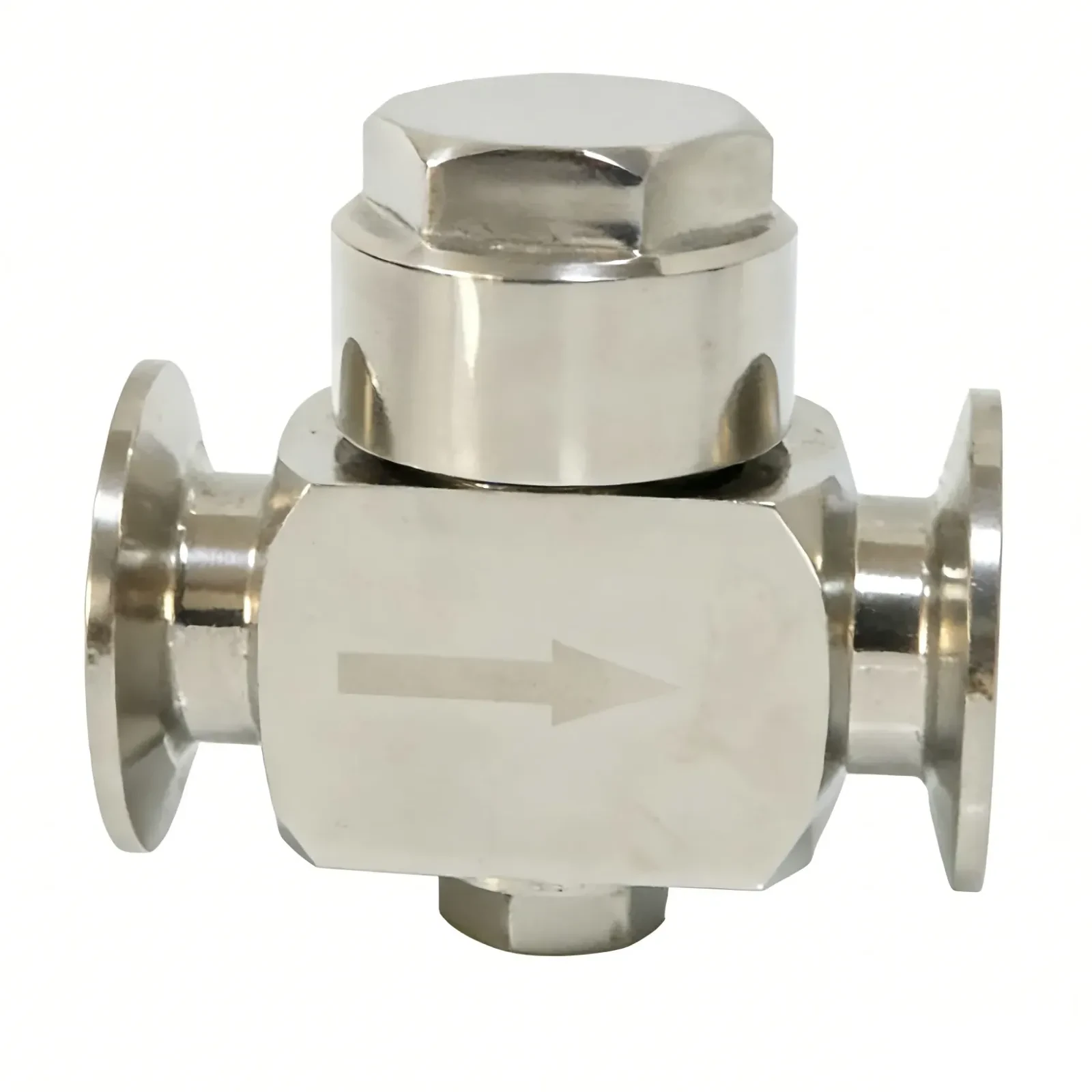
Steam Traps: Key Components for High-Purity Steam Piping Systems